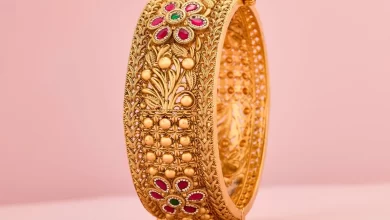
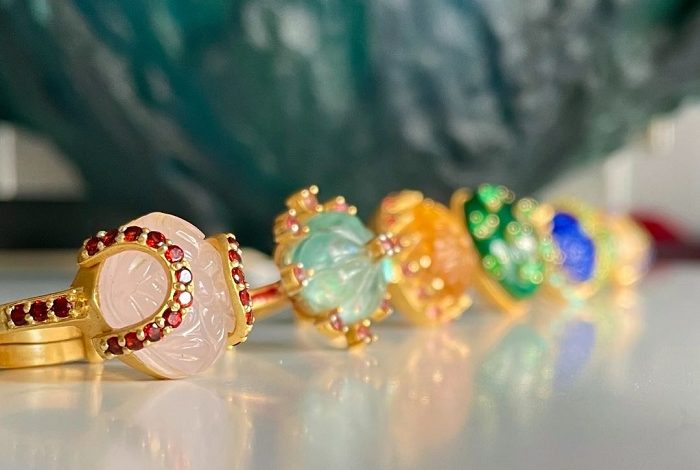
For decades, the fine jewelry industry operated under a predictable visual script. High-end showcases were dominated by monochromatic brilliance, where colorless diamonds set in platinum or white gold served as the undisputed benchmark of prestige. While classic diamonds will always hold an honored place in design, the modern jewelry landscape is experiencing a profound aesthetic shift. Contemporary collectors and everyday wearers are turning their attention toward the rich, unpredictable world of colored gemstones.
This shift is more than a fleeting seasonal trend. It represents a fundamental evolution in how people view luxury, craftsmanship, and personal identity. Rather than selecting pieces based strictly on traditional grading metrics, today’s buyers seek distinctive character, organic warmth, and emotional resonance. By embracing an expansive palette of rare minerals, unusual cuts, and inventive settings, independent jewelers and legacy fashion houses alike are rewriting the rules of modern adornment.
Moving Beyond the Monochromatic Standard
The historic dominance of colorless stones in bridal and fine jewelry was built on uniformity. A high-clarity diamond is prized for its ability to reflect white light, with standard grading rubrics encouraging consistency across carats and cuts. Yet that very uniformity has led to a sense of aesthetic fatigue.
Modern jewelry enthusiasts are increasingly wary of copy-paste luxury. They want pieces that feel personal and irreplaceable, qualities that colored gemstones possess inherently. Because no two natural sapphires, tourmalines, or opals share the exact same hue, tone, and saturation, choosing a colored gem guarantees an element of rarity that cannot be replicated.
Furthermore, the conventional bridal market has relaxed its once-rigid expectations. The solitaire diamond engagement ring is no longer the sole badge of commitment. Couples now frequently choose teal sapphires, rich forest-green emeralds, or peachy morganites to commemorate relationships, treating their rings as expressions of personal art rather than conventional conformity.
The Rise of Character-Rich and Niche Minerals
In previous generations, the colored gemstone conversation began and ended with the classic three: traditional pigeon-blood rubies, royal blue sapphires, and vivid green emeralds. While those legacy stones remain revered, contemporary designers are exploring a much broader geological spectrum, often championing minerals that were once overlooked or deemed unconventional.
Complex Sapphires and the Demand for Color Zoning
Among the most sought-after centerpieces in modern studios are parti-colored and bi-color sapphires, notably those ethically sourced from Montana and Australia. Unlike traditional sapphires treated to achieve a uniform royal blue, these stones exhibit natural color zoning. A single stone can flash shades of seafoam green, deep cerulean, and soft honey yellow depending on the lighting and the angle of view.
This optical complexity, known as pleochroism, transforms a ring or pendant into an interactive visual experience. Wearers are drawn to the moody, shifting tones that mimic nature, from mossy woodlands to coastal waters.
Celebrating Organic Inclusions Over Sterile Perfection
Traditional gemology long treated inclusions as flaws that diminished a stone’s value. Modern jewelry design has largely inverted this perspective, celebrating natural characteristics as the earth’s fingerprint.
-
Emeralds with visible jardin: The French term jardin refers to the moss-like crystalline inclusions naturally present inside genuine emeralds. Contemporary jewelers now deliberately showcase these patterns rather than hiding them, recognizing that they lend poetic depth and authentic provenance to the stone.
-
Salt-and-pepper diamonds and rutilated quartz: Stones threaded with graphite veins or golden rutile needles are being placed front and center in fine gold settings. These inclusions create intricate internal landscapes, proving that visual interest often trumps flawless transparency.
-
Spinels and tourmalines: Once viewed as secondary alternatives, spinels in stormy gray, lavender, and cobalt blue have surged in popularity due to their high refractive index and excellent hardness. Meanwhile, watermelon tourmalines and neon Paraíba tourmalines offer electric, hyper-saturated hues that inject youthful vitality into fine jewelry.
Architectural Settings and Unconventional Cuts
The resurgence of colored stones has triggered a parallel revolution in metalwork and lapidary arts. Traditional brilliant cuts, designed specifically to maximize scintillation in white diamonds, do not always showcase the deep saturation of a colored mineral. In response, modern lapidaries are revisiting vintage cuts and pioneering geometric shapes that highlight a stone’s hue and inner clarity.
Step cuts, such as baguettes, kites, hexagons, and elongated emerald cuts, feature broad, flat facets that act like quiet windows into the stone. Portrait cuts—extremely flat stones with minimal faceting—allow the raw beauty and color nuance of a gem to take center stage without visual distortion.
How these stones are mounted has also changed drastically. Delicate, prong-heavy settings are giving way to bold, protective structures:
-
Low-profile bezel settings: Wrapping a fine rim of metal entirely around the perimeter of a colored stone provides a sleek, modern frame while protecting softer gems from daily wear and tear.
-
East-west orientations: Mounting oval, marquise, or emerald-cut stones horizontally across the finger rather than vertically alters the silhouette entirely, lending an unexpected, contemporary edge to traditional ring designs.
-
Gypsy and flush mounts: Sinking gemstones directly into heavy, substantial gold bands creates smooth, wearable pieces that transition effortlessly from casual daytime wear to formal evenings.
Warm Metals and the New Palette Dynamics
The cool, industrial shine of white metals has largely taken a back seat to the warmth of rich yellow and unplated white gold. Yellow gold acts as an earthy, complementary backdrop for warm-toned gems like spessartite garnets, citrines, and pink tourmalines, while providing a striking, high-contrast anchor for cool green and blue stones.
Designers are also mastering the art of the multi-stone narrative. The resurgence of the toi et moi ring, which pairs two complementary stones side by side on an open or bypassing band, allows wearers to contrast a colored gemstone with a diamond, or to pair two distinct colored gems that symbolize distinct milestones. Cluster rings, where stones of varying shapes, sizes, and colors are arranged like an organic mosaic, have become a staple for collectors seeking asymmetry and dynamic movement.
Redefining the Modern Heirloom
Ultimately, the embrace of colored gemstones reflects a deeper cultural shift in how we value jewelry. An heirloom is no longer defined strictly by its appraisal figure or its adherence to formal traditions. Instead, an heirloom is created through emotional resonance, distinct craftsmanship, and a sense of shared story.
Colored gemstones allow individuals to break free from predictable luxury codes and invest in wearable art that feels intimately their own. By combining ancient, earth-born colors with adventurous lapidary techniques and modern metalwork, today’s jewelry designers are proving that fine jewelry is at its most compelling when it dares to be vibrant, imperfect, and wholly unique.