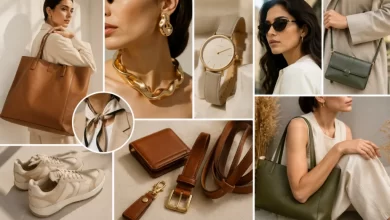
Most closets are built on reliable basics: straight-leg denim, crisp white tees, crewneck knits, and neutral button-downs. While these pieces form an effortless capsule, wearing them on repeat often leads to outfit fatigue. The instinct is usually to buy more clothes, but the real secret to personal style lies in how an outfit is finished.
Accessories are the architectural tools of styling. Belts, scarves, and hats introduce focal points, reshape volume, and inject texture into flat silhouettes. By mastering a few specific styling techniques, you can transform three or four basic garments into dozens of deliberate, polished outfits without spending money on an entirely new wardrobe.
The Strategic Role of Belts: Proportion and Structure
A belt is frequently treated as purely functional, worn only when trousers fit loosely at the waist. In high-level styling, however, a belt functions primarily as an anchor for proportion and visual contrast.
Defining Silhouette Over Layered Fabrics
Modern casual wear leans heavily toward oversized, unstructured cuts. While comfortable, voluminous garments can erase your natural frame. A belt provides instant structure by creating a distinct dividing line between your upper and lower halves.
-
Cinching outer layers: Wrap a medium-width leather belt over an unbuttoned knit cardigan or an oversized blazer. Instead of buckling it rigidly, slide the tip through the buckle and loop it underneath itself in an effortless half-knot. This defines the waist while keeping the silhouette relaxed.
-
Transforming shirt dresses: Drop-waist or straight-cut shirt dresses can look boxy on their own. Adding a sturdy one-and-a-half-inch belt immediately pulls in the excess fabric, creating subtle pleating that adds movement and shape.
-
The French tuck anchor: When doing a partial tuck with an oversized sweater or linen shirt into high-waisted denim, a belt prevents the tuck from looking accidental. It cleanly frames the tuck point and establishes your waistline.
Selecting Width and Hardware
The width of your belt dictates the mood of the entire look. As a general rule, one to one-and-a-half inches is the most versatile width for everyday wear. It fits standard belt loops easily and works equally well resting on your hips or pulled snug around your natural waist.
Hardware is another subtle lever for cohesion. If your outfit consists of cool, monochromatic tones like charcoal, crisp white, and black, a belt with polished silver hardware sharpens the clean aesthetic. For earthy neutrals, olive greens, and classic blue denim, warm brass or brushed gold adds richness. Look for full-grain leather, pebbled textures, or woven suede to introduce tactile depth against smooth cotton denim.
The Versatility of Scarves: Color, Movement, and Texture
Scarves are often relegated to cold-weather utility, yet lightweight silk, modal, and linen options are among the most dynamic accessories you can own. A scarf breaks up large fields of solid color, softens rigid necklines, and introduces fluid movement to stiff tailored fabrics.
Modern Neck Ties and Placements
The key to wearing a neck scarf without looking costumey is avoiding overly prim or complicated knots. Keep the ties simple and functional.
-
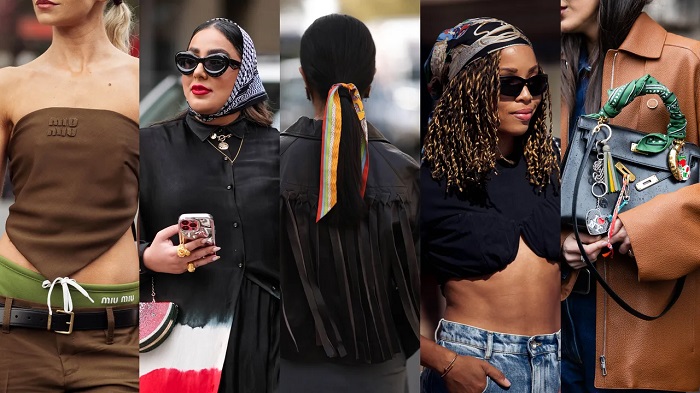
The bandana roll: Fold a standard square silk scarf diagonally into a triangle, then roll it loosely toward the point. Wrap it around your neck with the point centered on your chest, cross the ends behind your neck, bring them forward, and tie a small double knot beneath your chin or off to one side. This adds an artful touch to an ordinary crewneck sweatshirt or ribbed tank.
-
The tailored drape: With an oblong scarf made from fine wool or modal, skip the knot entirely. Drape it around the back of your neck and let both ends hang straight down inside the lapels of a trench coat or structured wool coat. This creates two vertical lines that draw the eye up and down, naturally elongating your silhouette.
-
The bias neckerchief: Take a small square scarf, roll it on the bias into a thin strip, wrap it once around the neck, and tie a single flat knot with the short ends pointing outward. Paired with an unbuttoned poplin shirt, it fills the open collar space with a burst of color.
Unconventional Placement Beyond the Neckline
When an outfit already feels busy around the collar, move the scarf elsewhere to disperse visual interest.
Thread a rolled silk scarf through the front loops of your denim instead of a leather belt, tying it loosely at the hip. You can also wrap a printed twill ribbon around the base of a structured leather tote handle to soften a work bag. In warmer months, tying a square scarf around a low ponytail or weaving it into a loose braid upgrades a simple t-shirt and shorts into an intentional warm-weather look.
Hats as the Architectural Finish
Hats are the most decisive accessory available. While belts manage proportion and scarves introduce color, a hat fundamentally sets the posture of an outfit. Wearing one indicates that your look was conceived as a finished composition.
Choosing the Right Crown and Brim
The scale of your hat should balance the scale of your clothing. Heavy outerwear requires a hat with substance, while lightweight summer tailoring demands airier materials.
-
Structured wool felt hats: Medium-brim fedoras and flat-brim rancher hats ground autumnal and winter ensembles. They pair naturally with structured overcoats, chunky knitwear, straight-leg raw denim, and leather boots. Ensure the brim width does not extend drastically past your shoulders to maintain balanced proportions.
-
Minimalist baseball caps: A clean, unbranded baseball cap in cotton twill, washed canvas, or corduroy is the centerpiece of modern high-low dressing. Pair a neutral cap with tailored wool trousers, an oversized coat, and clean leather sneakers. The sporty cap cuts through the formality of the tailoring, giving you an effortless street-style look.
-
Structured straw and raffia: In summer, wide-brim Panama hats or woven boaters elevate sundresses, linen trousers, and swimwear. The organic texture of woven straw balances crisp linen and breezy poplin effortlessly.
Building Balanced Formulas
Upgrading your everyday clothes does not mean wearing every accessory at once. Piling on a wide-brim hat, a patterned scarf, and a heavy buckle simultaneously creates competing focal points that overwhelm the eye.
The most effective strategy is the rule of two. Choose one focal accessory to lead the outfit and a second to provide quiet support.
-
Formula one: Pair a solid black t-shirt and straight denim with a cognac leather belt with brass hardware, finishing with an unbranded cotton cap in washed olive. The belt and cap add structure and color balance without visual noise.
-
Formula two: Style an oversized cream knit and tailored black trousers with a small, printed silk neckerchief, leaving your head bare and finishing with a slim, minimalist black belt. The scarf carries the visual weight, while the belt quietly maintains your waistline.
-
Formula three: Layer an oversized trench over a white button-down, add a wide-brim felt hat, and ground the look with a classic harness-buckle belt. Skip the neckwear entirely so the collar remains crisp and uncluttered.
Great style is rarely about the volume of clothes hanging in your closet. By treating belts, scarves, and hats as structural components rather than afterthoughts, you can build a refined personal uniform using the reliable pieces you already wear every single day.